Gemma 4 on a Laptop Means Your Firewall Is Already Obsolete
Open-weight models in the Gemma 4 class are moving onto local hardware, turning on-device inference into a blind spot for the SOC. CISOs are shifting governance away from API monitoring and toward intent and access control on the endpoint.

Models like Google Gemma 4 are raising the bar on enterprise AI governance, with CISOs scrambling to secure workloads as inference migrates out of the cloud and onto the edge.
The perimeter that just disappeared
Security chiefs have built massive digital walls around the cloud: advanced CASBs, every shred of traffic heading to external LLMs routed through monitored corporate gateways. The logic looked sound to boards — keep sensitive data inside the network, police outgoing requests, and IP stays safe.
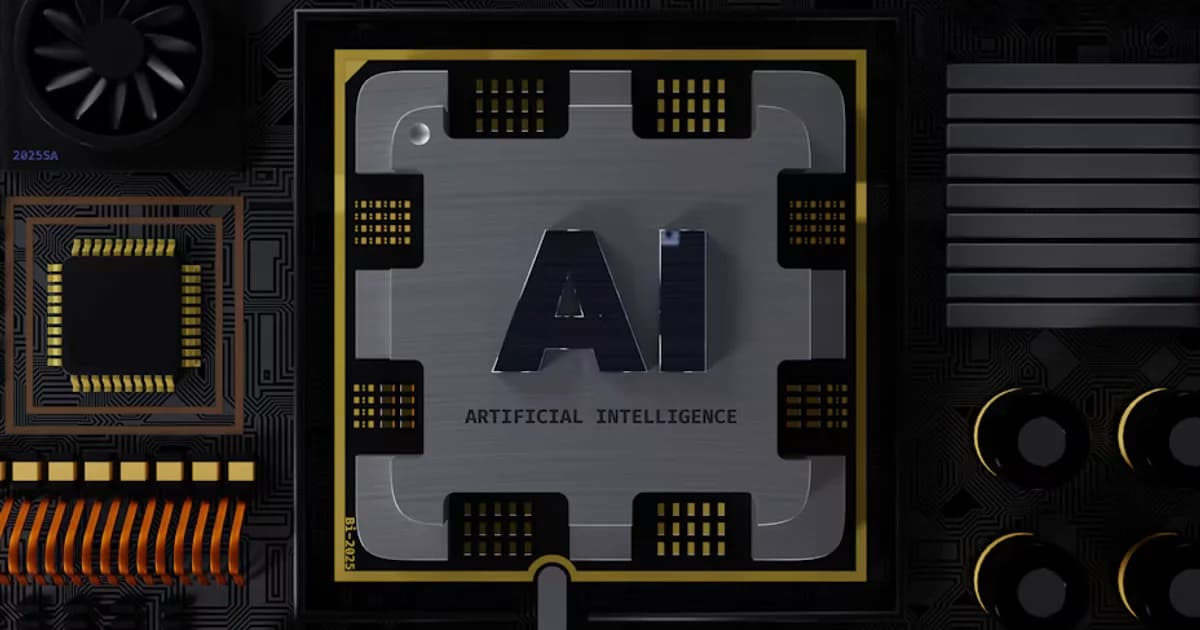
Google obliterated that perimeter with the release of Gemma 4. Unlike massive models confined to hyperscale data centres, this family of open weights targets local hardware. It runs directly on edge devices, executes multi-step planning, and can operate autonomous workflows right on a local machine.
On-device inference has become a glaring blind spot for enterprise security operations. Security analysts cannot inspect network traffic if the traffic never hits the network in the first place. An engineer can ingest highly classified corporate data, process it through a local Gemma 4 agent, and generate output without triggering a single cloud firewall alarm.
Collapse of API-centric defences
Most corporate IT frameworks treat ML tools like standard third-party software vendors. You vet the provider, sign a chunky enterprise data processing agreement, and funnel employee traffic through a sanctioned gateway. That standard playbook falls apart the moment an engineer downloads an Apache 2.0 licensed model like Gemma 4 and turns their laptop into an autonomous compute node.
Google paired the model rollout with the Google AI Edge Gallery and a heavily optimised LiteRT-LM library — tools that drastically accelerate local execution while providing the structured outputs needed for complex agentic behaviours. An autonomous agent can sit quietly on a local machine, iterate through thousands of logic steps, and execute code locally at impressive speed.
European data sovereignty law and strict global financial regulation mandate complete auditability for automated decision-making. When a local agent hallucinates, makes a catastrophic error, or inadvertently leaks internal code into a shared corporate Slack channel, investigators want detailed logs. If the model operates entirely offline on local silicon, those logs simply do not exist inside the centralised IT security dashboard.
The most exposed verticals: finance and healthcare
Financial institutions stand to lose the most from this architectural shift. Banks have spent millions implementing strict API logging to satisfy regulators investigating generative ML usage. If algorithmic trading strategies or proprietary risk-assessment protocols are parsed by an unmonitored local agent, the bank violates multiple compliance frameworks at once.
Healthcare networks face a similar reality. Patient data processed through an offline medical assistant running Gemma 4 might feel secure because it never leaves the laptop. The reality is that unlogged processing of health data violates the core tenets of modern medical auditing. Security leaders must prove how data was handled, what system processed it, and who authorised execution.
The governance trap and the intent-control dilemma
Industry researchers describe this current adoption phase as the governance trap. Management panics when it loses visibility. It tries to rein in developer behaviour by piling on bureaucracy — slow architecture review boards, exhaustive deployment forms before any new repo gets installed.
Bureaucracy rarely stops a motivated developer chasing an aggressive product deadline; it just pushes the behaviour further underground. The result is shadow IT powered by autonomous software.
Real governance for local systems requires a different architectural answer. Instead of trying to block the model itself, security leaders need to focus intensely on intent and system access. An agent running locally on Gemma 4 still needs specific system permissions to read local files, access corporate databases, or execute shell commands on the host.
Access management becomes the new digital firewall. Rather than policing the language model, identity platforms must tightly restrict what the host machine can physically touch. If a local Gemma 4 agent attempts to query a restricted internal database, the access control layer must flag the anomaly immediately.
Enterprise governance in the edge AI era
The definition of enterprise infrastructure is expanding in real time. A corporate laptop is no longer a dumb terminal used to access cloud services over a VPN — it's an active compute node capable of running sophisticated autonomous planning software.
The cost of that autonomy is deep operational complexity. CTOs and CISOs face a requirement to deploy endpoint detection tools specifically tuned for local ML inference — systems that can differentiate between a human developer compiling standard code and an autonomous agent rapidly iterating across local file structures to solve a complex prompt.
The cybersecurity market will catch up; EDR vendors are already prototyping quiet agents that monitor local GPU utilisation and flag unauthorised inference workloads. But those tools are in their infancy today.
Most corporate security policies written in 2023 assumed every generative tool lived comfortably in the cloud. Revising them requires an uncomfortable admission at the executive board: IT no longer dictates exactly where compute happens.
Google designed Gemma 4 to put state-of-the-art agentic skill into the hands of anyone with a modern processor. The open-source community will adopt it aggressively. Enterprises now have a very short window to figure out how to police code they do not host, running on hardware they cannot constantly monitor — leaving every CISO staring at their network dashboard with a single question: what, exactly, is running on the endpoints right now?