ChatGPT Images 2.0: OpenAI Adds Reasoning, Better Text and 4K API Output
ChatGPT Images 2.0, powered by gpt-image-2, adds reasoning before generation, stronger text rendering, multilingual layouts, 4K API output and up to 8 consistent images from one prompt.
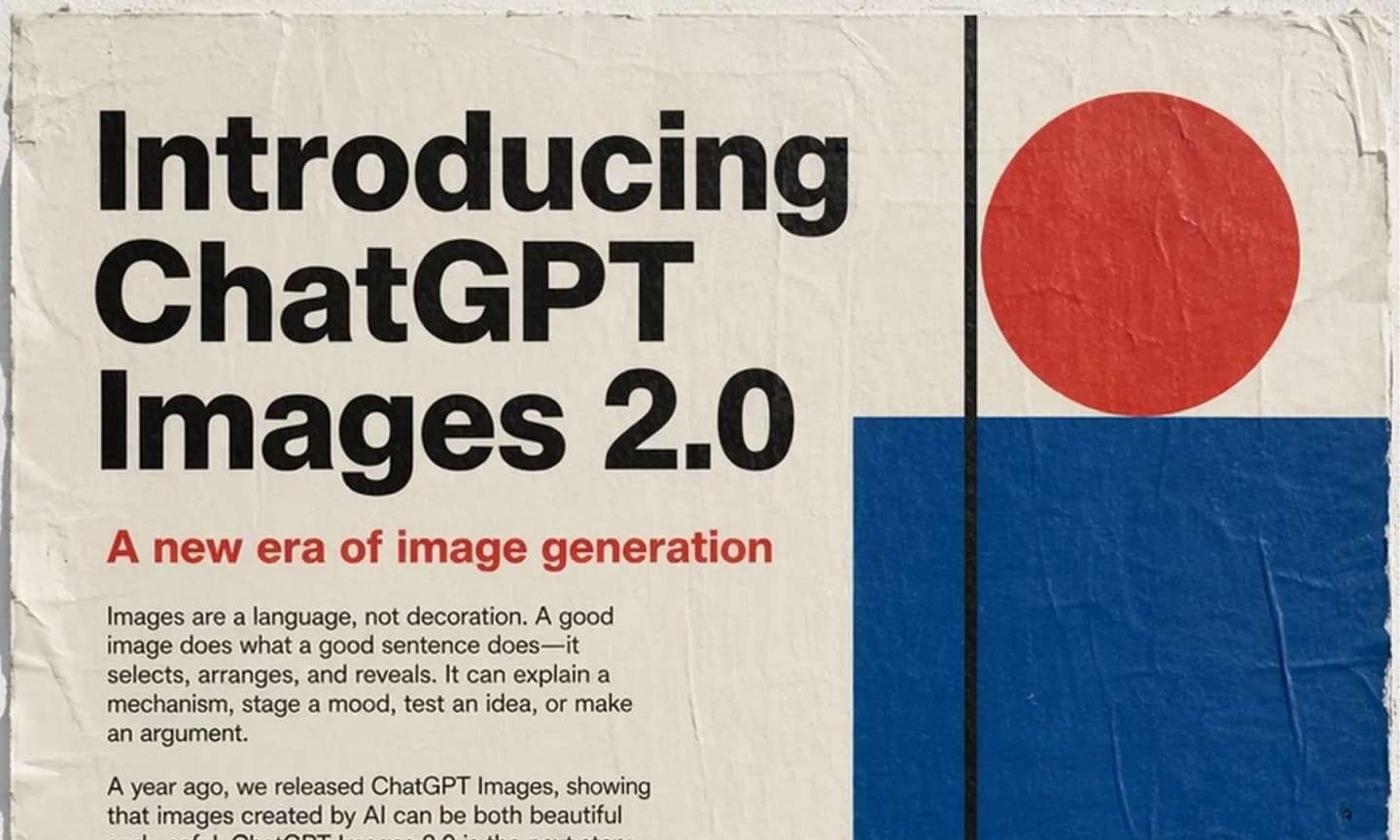
OpenAI published the launch details and model examples in its official ChatGPT Images 2.0 announcement.
OpenAI has officially unveiled ChatGPT Images 2.0 (gpt-image-2), a new generation image model designed as a direct response to Google's competing solution, Gemini Nano Banana 2. Previously developed under the codename "duct tape," the system introduces major upgrades: built-in reasoning capabilities, significantly improved text rendering, and enhanced multilingual support.
For anyone following generative AI, the important change is not only image quality. OpenAI is trying to make image generation behave more like a structured task: understand the prompt, plan the composition, then render the final asset.
Quick answer: what changed in ChatGPT Images 2.0
ChatGPT Images 2.0 is OpenAI's upgraded image generation system built around gpt-image-2. It improves four areas that matter in real workflows:
- reasoning before rendering, so the model can plan layouts, diagrams and multi-step visual instructions;
- better text rendering, especially for menus, covers, user interfaces and dense visual documents;
- multilingual image generation, including stronger handling of non-Latin scripts;
- higher-resolution and multi-image output, with up to 4K generation through the API and up to 8 consistent images from one prompt.
That makes it more useful for product mockups, educational content, infographics, storyboards and brand systems than earlier image tools that mainly optimized for a single attractive picture.
Reasoning, baked into the image generator
The most notable innovation is the integration of "O-series" reasoning directly into the image generator. Unlike traditional models that act as a "black box," the Thinking version operates more like an AI agent. It can:
- analyze data,
- browse the web in real time,
- process uploaded files (such as PowerPoint presentations),
- and plan the structure of an image before rendering it.
As a result, the model goes beyond simply "drawing" and can produce well-structured, logical outputs such as:
- complex infographics and maps with accurate data representation and clear legends,
- educational materials spanning multiple pages while maintaining visual and conceptual consistency,
- interior design concepts and visual systems, including floor plans, color palettes, and material lists.
Text rendering: finally fixed
The model also addresses one of the biggest weaknesses of earlier image generators: incorrect text rendering. OpenAI describes this improvement as a "step change."
Images 2.0 can accurately generate text even in dense layouts like restaurant menus, magazine covers, or user interfaces. It has also become effectively multilingual, with much stronger support for non-Latin scripts such as Japanese, Chinese, Korean, Hindi, and Bengali. Text in these languages is not just translated but naturally integrated into the visual design.
This is the part that matters most for adoption outside entertainment. A beautiful image with broken text is hard to use in a presentation, landing page, poster or product concept. If ChatGPT Images 2.0 can keep labels, headings and UI copy coherent, it becomes closer to a practical design assistant than a novelty generator.
Under the hood
OpenAI has completely reworked the model's architecture and has not disclosed whether it is diffusion-based or autoregressive. However, several technical capabilities are known:
- image generation up to 2K resolution in ChatGPT and up to 4K via the API (beta),
- support for a wide range of aspect ratios, from 3:1 panoramas to 1:3 vertical formats,
- the ability to generate up to 8 consistent images from a single prompt (useful for comics or storyboards),
- knowledge updated through December 2025.
Access tiers
Access to the model is divided into tiers:
- Free and Codex users get access to Images 2.0 Instant — faster generation, improved instruction following, better text handling.
- Plus, Pro, and Business users can use the Thinking model, which includes tools, web browsing, and multi-image generation.
- Pro users additionally gain access to ImageGen Pro for the most advanced results.
API and pricing
For developers, gpt-image-2 is available via Microsoft Foundry and API access, with pricing set at:
- $8.00 per million input tokens,
- $2.00 per million cached input tokens,
- $30.00 per million output tokens — which is $2 cheaper than the previous GPT-Image-1.5 model.
Safety and disinformation
OpenAI emphasizes a strong focus on safety, especially given the rise of disinformation campaigns and deepfakes. Images 2.0 includes multi-layered safeguards such as watermarking and advanced content filters. The company also maintains strict policies against election interference and the creation of misleading political content.
That safety layer connects directly with OpenAI's separate work on image provenance. If you want to check whether a file may have come from OpenAI tools, see our guide to the OpenAI image verification tool.
Who should pay attention
The biggest early audience is not only artists. It is teams that need visual work to follow instructions:
- educators building worksheets, diagrams and multi-page learning materials;
- marketers testing campaign concepts before sending work to a designer;
- product teams sketching interface states and onboarding screens;
- publishers making explainers, covers and social graphics;
- developers using the API to generate consistent visual assets at scale.
The obvious limitation is review. Stronger reasoning does not remove the need to check factual claims, brand rules, legal rights or accessibility. Image generation is becoming more capable, but the final asset still needs human judgment before it goes public.
Bottom line
Images 2.0 isn't just another bump on the quality ladder — it's the first time a major image generator plans like an agent before it renders. Combined with the text-rendering step change and proper multilingual support, it closes the biggest gaps that still forced designers and educators back to manual tools. The Google vs. OpenAI race on generative imagery just got significantly more interesting.