Cheap Chinese AI models are getting stronger. Should OpenAI and Anthropic worry?
DeepSeek, GLM, Qwen and Kimi show that the AI race is no longer only about benchmark wins. Price, open weights, long context and custom agent infrastructure are becoming just as important.
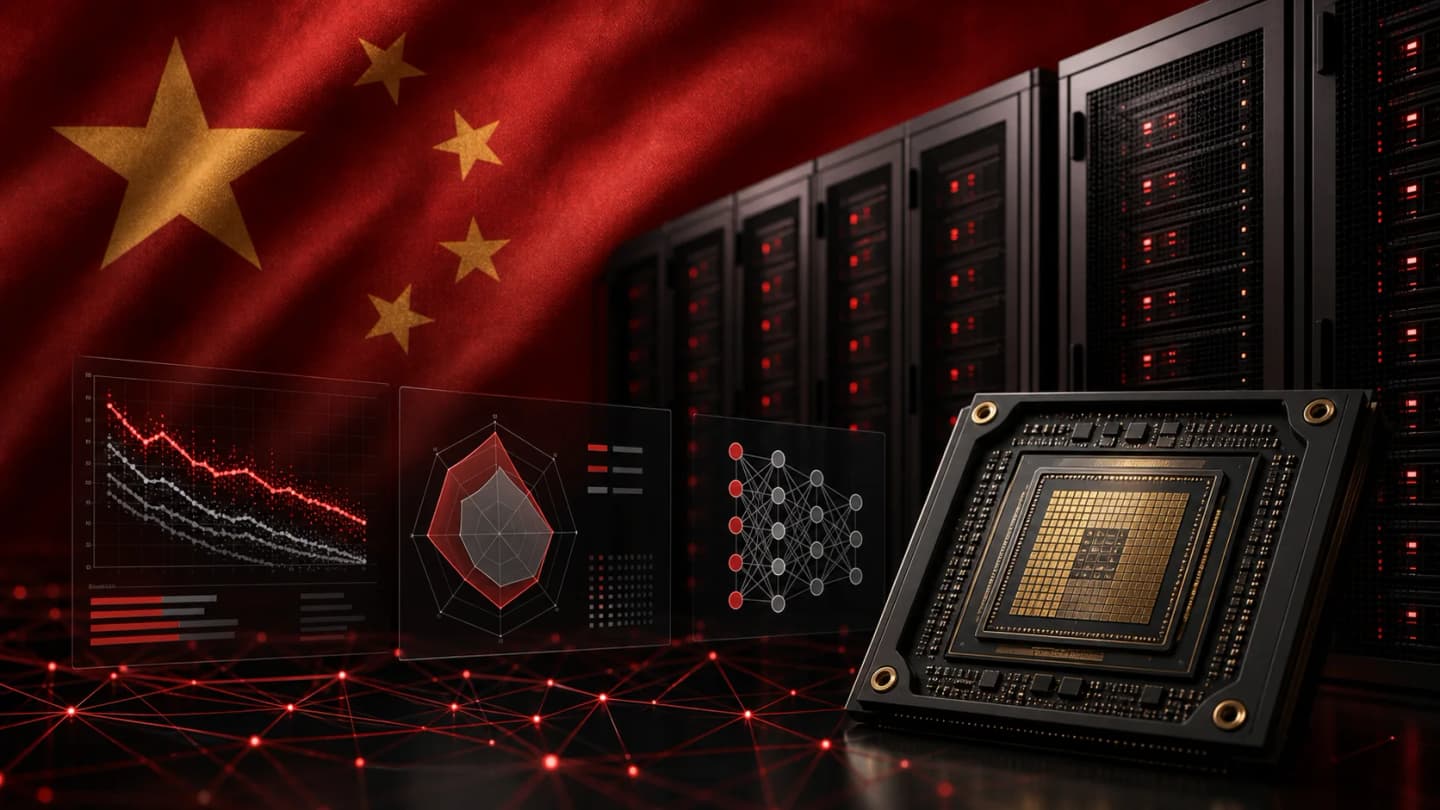
Until recently, the conversation about top AI models was fairly predictable: OpenAI, Anthropic, Google, and sometimes Meta as the open-source counterweight. That picture is becoming less comfortable. More attention is now moving toward Chinese AI models: DeepSeek, GLM, Qwen and Kimi. Not because each one wins every benchmark, but because they are increasingly good enough, much cheaper and available in ways that let companies build their own product layers.
This is not a story about China suddenly "winning AI." That would be too simple. The better question is: what happens when a model does not need to be the absolute best to change the economics of an entire AI product?
That is why the topic is both clickable and important. Users are searching for alternatives to ChatGPT. Companies are watching API costs. Developers are testing whether open-weight models can be connected to agents, tools and private infrastructure.
The short thesis
Chinese AI models do not need to beat OpenAI and Anthropic at everything. They only need to be good enough, cheaper enough and controllable enough for specific workflows. That is already changing the way teams think about AI products.
Why this trend is accelerating
For a long time, the advantage of closed frontier models was obvious: better answers, better tools and a stronger ecosystem. Cheap and open models were interesting, but often required a quality tradeoff large enough that premium models still won in business settings.
That tradeoff is shrinking.
DeepSeek has shown that aggressive pricing and long context can change cost calculations. Z.AI has released GLM-5.2, a 1M-context model that approaches top systems in selected benchmarks. Moonshot AI is pushing Kimi K2.7 Code, a model aimed at long-horizon software engineering. Alibaba's Qwen family, meanwhile, has become a broad open-weight ecosystem spanning general LLMs, coding variants and multimodal models.
Together, they create market pressure. If a model is cheaper, available through an API, released with open weights or simply easier to adapt, companies start asking a sharper question: do we really need the most expensive frontier model for every task?
Four model families, one shared direction
Not every Chinese model plays the same role. DeepSeek is associated with aggressive pricing and long context. GLM-5.2 is trying to be an open model close to the frontier. Qwen acts as a broad model family for many use cases. Kimi is increasingly focused on agentic coding.
| Model / family | What stands out | Where it may fit | Main risk |
|---|---|---|---|
| DeepSeek V4 | aggressive pricing, 1M context, Pro and Flash variants | long-context work, agents, document analysis, cheaper workflows | quality and data policy need internal testing |
| GLM-5.2 | open weights, 1M context, strong benchmark positioning | agentic coding, tools, custom infrastructure | the model is large and not trivial to self-host |
| Qwen | broad open-weight model family from Alibaba | products that need several model sizes and variants | quality depends heavily on the chosen variant |
| Kimi K2.7 Code | long coding tasks and tool use | coding assistants, repositories, developer automation | benchmarks need validation on your own codebase |
The shared direction is clear: cost and control are becoming as important as raw intelligence.
Price changes product architecture
The biggest change is not that an end user gets a slightly different answer in a chatbot. The bigger change happens in how product teams design AI features.
When tokens are expensive, AI products behave cautiously. They send shorter context, limit agent loops, analyze fewer files and reserve the strongest model for the most valuable steps.
When tokens become much cheaper, teams can design differently:
- give an agent more of a repository,
- allow more iterations,
- maintain longer task memory,
- use cheaper models for routine steps,
- call a premium model only when hard reasoning is actually needed.
That is the real challenge for OpenAI, Anthropic and Google. Being best on a leaderboard is not enough. A provider also has to justify why a customer should pay several times more for a task that a cheaper model can complete well enough.
Open weights are not just ideology
The open-model debate often falls into two camps. One side says open weights are always better because they offer freedom. The other says closed models are easier and safer for companies.
The practical reality is less dramatic.
Open weights can matter when a company:
- wants to evaluate a model on private data without depending on one hosted API,
- needs more control over infrastructure,
- runs many repeatable tasks at scale,
- wants to optimize latency and cost,
- has a team that can handle inference, monitoring and safety controls.
But open weights are not magic. Large models still need hardware, optimization and people. Self-hosting may be cheaper at scale, but it is often harder than calling a hosted API.
Why companies will not adopt them blindly
There is another side to the trend. The more Chinese models enter the conversation, the more questions come up around data, compliance, cybersecurity and dependence on infrastructure outside the U.S. or Europe.
For summarizing public text, the risk may be limited. For a bank, law firm, medical company or software house working with client code, the decision is more serious. API terms, data retention, processing location and auditability can matter as much as benchmark scores.
The most realistic scenario is not that companies replace every model with a Chinese equivalent. It is a layered approach:
- a premium model for high-stakes work,
- a cheaper model for routine volume,
- a local or open-weight model where control matters,
- an internal benchmark deciding what works in each workflow.
What this means for regular users
For end users, this race may be good news. Cheaper models can put AI features into ordinary applications instead of reserving them for expensive premium plans.
We may see more:
- assistants inside code editors,
- document automation tools,
- large-folder analysis features,
- local or semi-local AI features,
- apps that quietly route work across several models.
The most interesting products will not necessarily advertise "we use model X." They will simply feel cheaper, faster and better at handling larger context.
Should OpenAI and Anthropic worry?
Yes, but not in the way dramatic headlines suggest.
OpenAI and Anthropic still have huge advantages: model quality, ecosystem, distribution, trust in parts of the market and mature agentic tools. Claude Code and Codex are not just models. They are work environments.
The problem is that quality advantages increasingly have to justify themselves economically. If a company can handle 70 or 80 percent of tasks with a cheaper model and reserve the premium model for the hardest cases, its cost structure changes quickly.
This is not the end of frontier models. It is the end of the simple assumption that every serious AI feature must start with the most expensive API available.
The main takeaway
Chinese AI models are one of the most important trends to watch because they combine three things that drive adoption: lower cost, more openness and improving quality.
DeepSeek, GLM, Qwen and Kimi are not identical and do not solve the same problems. Together, they show that the market is moving from "who has the smartest chatbot?" to "who can deliver a good-enough model at a price that lets teams build real products?"
For companies, that may be one of the biggest AI shifts of the year. For users, it means more competition, cheaper tools and more AI in places where it used to be too expensive.
Photo: TreffikAI generated cover.