GPT-5.6-Cyber: OpenAI brings a zero-day research model to Daybreak
OpenAI has introduced GPT-5.6-Cyber, a specialized model for vulnerability research and authorized security testing. We examine its capabilities, benchmark results, limitations and controlled access through Daybreak Red.
OpenAI has introduced GPT-5.6-Cyber, a specialized model designed for advanced cybersecurity research. It can search for previously unknown vulnerabilities, analyze code and help build or validate exploit chains. It is not, however, another model that will simply appear in the picker of an ordinary ChatGPT account. Access is reserved for verified professionals and organizations carrying out authorized work through Daybreak Red.
That distinction is central to the launch. GPT-5.6-Cyber has fewer refusals for some high-risk, dual-use requests. The same capability could help a security team find a flaw before an attacker or make abuse easier. OpenAI is therefore pairing the stronger model with controlled distribution, identity checks, monitoring and restrictions on acceptable use.
GPT-5.6-Cyber at a glance
- built on GPT-5.6 Sol,
- designed for vulnerability research, exploit work and security testing,
- scored 95.0% on OpenAI's internal advanced cybersecurity completion test,
- helped identify and chain two V8 flaws fixed as CVE-2026-15903,
- classified by OpenAI as having High, but not Critical, cyber capability,
- available through controlled Daybreak Red access rather than a public API.
How GPT-5.6-Cyber differs from GPT-5.6 Sol
GPT-5.6 Sol remains a general frontier model for coding, reasoning, science and agentic work. GPT-5.6-Cyber uses that foundation but receives additional training for specialized security tasks. OpenAI specifically cites zero-day discovery and exploit-chain development.
The important difference is not that Cyber is simply a smarter version of Sol. It has a different behavior profile. Inside a controlled environment, it can engage with tasks that the general model may reject under its standard safeguards. That matters to an experienced researcher who needs to establish whether a vulnerability can actually be exploited. It is also precisely the capability that would be unsafe to offer anonymously to every user.
OpenAI has not announced public self-service pricing or a generally available API model identifier. Interested teams are directed to apply to Daybreak. GPT-5.6-Cyber should therefore not be treated as an ordinary product tier alongside Sol, Terra and Luna.
Daybreak Blue and Daybreak Red: two access levels
OpenAI is expanding Daybreak alongside the new model. Rather than offering a single route for cybersecurity work, it now describes two tracks.
| Program | Available models | Typical uses | Intended users |
|---|---|---|---|
| Daybreak Blue | general models including GPT-5.6 Sol, with tailored safeguards | secure code review, malware analysis, incident response, patch validation | most defensive security teams |
| Daybreak Red | specialized models including GPT-5.6-Cyber | zero-day research, exploit validation, authorized red teaming | advanced researchers and selected organizations |
Blue is the recommended default for most defenders. Sol is already strong on a broad range of tasks and can produce more complete reports. Red is intended for cases where a researcher genuinely needs to validate exploitability or run more offensive testing within a clearly defined authorization boundary.
Access requires identity verification, account security, acceptance of usage restrictions and work that has a legitimate, authorized purpose. OpenAI also says activity will be monitored. From September 1, 2026, individual Daybreak accounts are expected to require hardware security keys.
The 95% result is striking, but context matters
The headline result comes from an internal evaluation called Advanced Cybersecurity Completion Rate. It measures whether a model can finish advanced security tasks, including work that may require a more permissive response to dual-use content.
| Model and access mode | Score |
|---|---|
| GPT-5.6-Cyber | 95.0% |
| GPT-5.5-Cyber | 57.3% |
| GPT-5.6 Sol through Daybreak Blue | 2.0% |
| GPT-5.6 Sol in standard mode | 1.5% |
The gap is enormous, but it does not mean Cyber is 63 times better than Sol at cybersecurity. The evaluation partly measures willingness to complete work that a general model may refuse. It demonstrates the effect of specialized training and a different behavior policy, not universal superiority in every kind of security analysis.
GPT-5.6-Cyber also outperformed Sol and GPT-5.5-Cyber on ExploitGym. OpenAI reports a stronger result on an internal test for novel vulnerability discovery and exploit development as well. The picture changes on vulnerability report writing, where Sol performed better. Cyber produced shorter, less detailed reports even when it was effective at finding the underlying issue.
That mixed result offers a useful lesson for security teams. A strong workflow may use more than one model. GPT-5.6-Cyber can assist with discovery and technical validation, while Sol can help document impact, organize evidence and produce a clearer disclosure for the vendor.
Two V8 flaws combined into one attack chain
The most concrete case study comes from V8, the JavaScript engine used by Chromium and other products. According to OpenAI's official GPT-5.6-Cyber announcement, the model found two previously unknown vulnerabilities. It then helped chain them together to corrupt memory and escape the V8 heap sandbox.
OpenAI disclosed the findings to Google through a coordinated process. The flaws were fixed and assigned the shared identifier CVE-2026-15903, rated High severity. This case matters more than a standalone benchmark because it covers a fuller research cycle: navigating a large codebase, finding the defects, establishing how they interact and passing the evidence to the vendor for remediation.
OpenAI also reports five vulnerabilities in a popular mobile operating system, three critical issues in a widely used database and more than 400 kernel privilege-escalation findings. Some product names remain undisclosed while vendors work on fixes and coordinated disclosure. Until more technical reports become public, these figures should be understood as OpenAI's claims rather than independently verified results.
High capability, but below OpenAI's Critical threshold
OpenAI classifies GPT-5.6-Cyber as having High cyber capability under its preparedness framework. The company says it remains below the Critical threshold. A full system card is expected later, so the launch-day material does not yet expose every methodological detail, risk evaluation or limitation.
The company also states that GPT-5.6-Cyber was not involved in the Hugging Face incident, nor were other models scheduled for release. That clarification matters because timing alone could otherwise encourage unsupported claims connecting the new model to an earlier event.
The High classification helps explain why OpenAI avoided ordinary distribution. Giving defenders more effective tools only works if the same capability does not become an anonymous, self-service attack assistant. Verification cannot eliminate misuse, but it raises the cost, creates accountability and gives OpenAI a way to revoke access.
How teams should use a model like this
Controlled enrollment does not make unrestricted deployment safe. OpenAI recommends that teams avoid granting broad infrastructure access simply because the model is available through Daybreak. A responsible workflow should include:
- a precise definition of the systems and repositories covered by authorization,
- isolated or sandboxed execution for model-generated tools,
- least-privilege credentials and restricted network access,
- audit logs and human approval before consequential actions,
- Codex auto-review in preference to unrestricted full access where possible,
- coordinated disclosure of confirmed vulnerabilities to affected vendors.
A model capable of developing an exploit should never determine its own target or scope. It may accelerate analysis, but a human remains responsible for authorization, operating boundaries and the disclosure process.
What GPT-5.6-Cyber changes in practice
The launch does not mean every security team should immediately seek Daybreak Red access. Daybreak Blue and the general GPT-5.6 Sol model may be more useful for most organizations, especially for code review, incident analysis and patch validation. Cyber becomes relevant when an organization already runs a mature vulnerability research program and can safely handle highly actionable findings.
The more important shift may be the distribution model itself. The most sensitive AI capabilities can advance faster than public products while reaching a smaller group of verified users. OpenAI is also expanding Daybreak through trusted partners, including consulting firms and security vendors. Access remains with the approved partner rather than automatically transferring to the partner's customers.
GPT-5.6-Cyber is therefore both a model launch and a test of how dual-use frontier capabilities can be distributed. If Daybreak works as intended, advanced defenders gain a faster way to uncover serious flaws while OpenAI retains control over access. If identity checks or monitoring prove insufficient, the same model will strengthen the case for tighter restrictions on future cyber-capable systems.
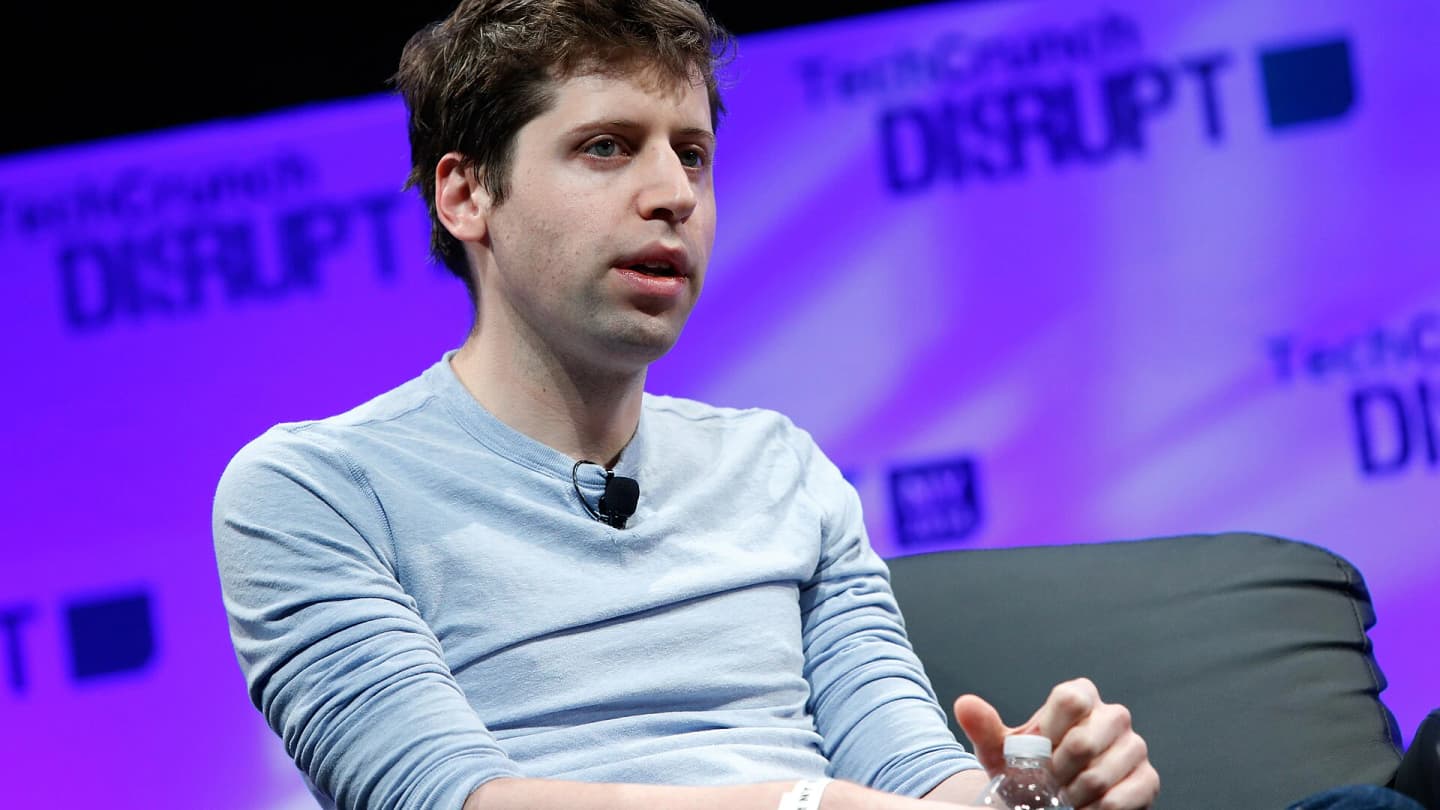
(Photo: TechCrunch, photo by Brian Ach, cropped; CC BY 2.0.)